CASE STUDY: Optus Pavillion — 3mm Precision in Custom Structural Engineering
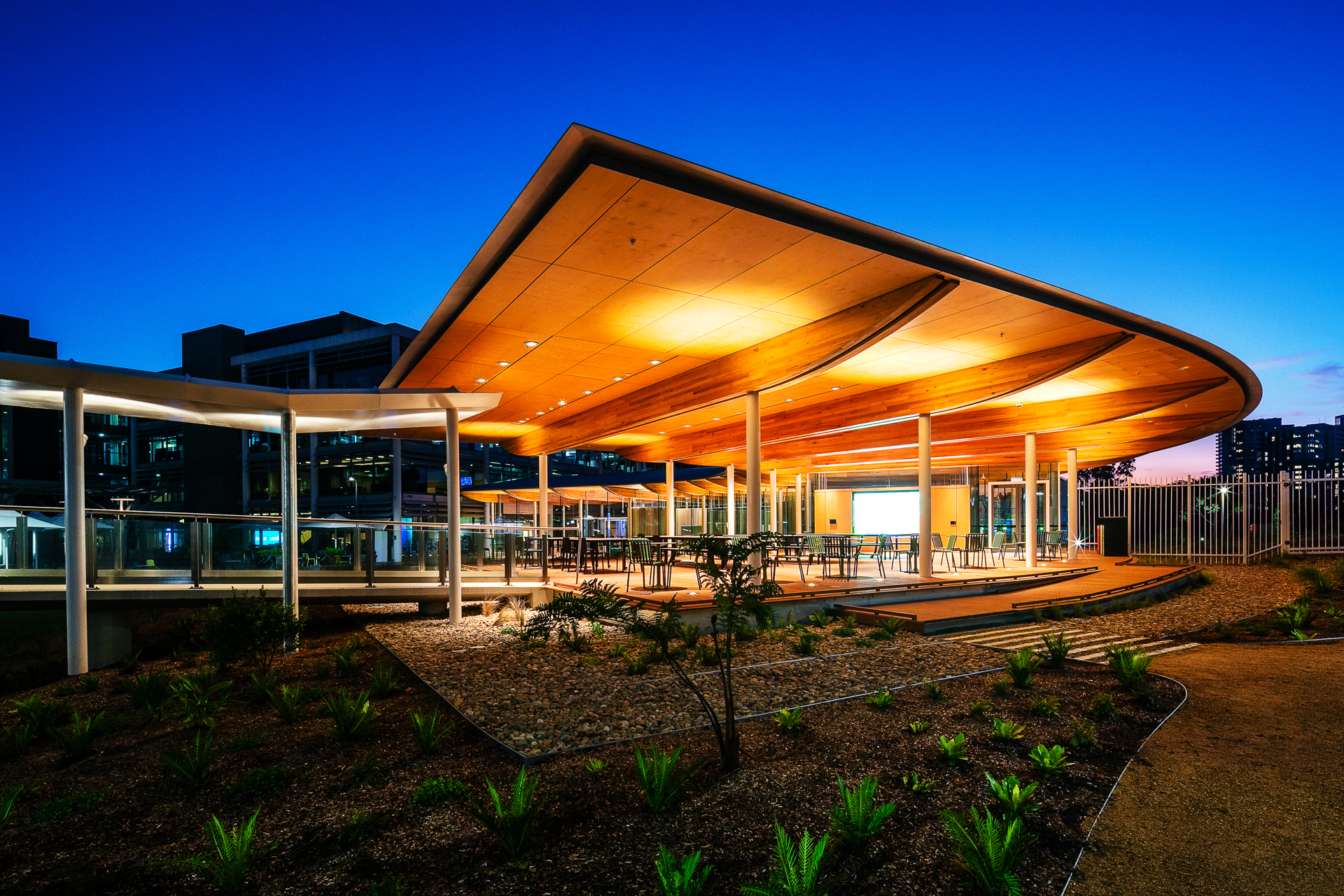
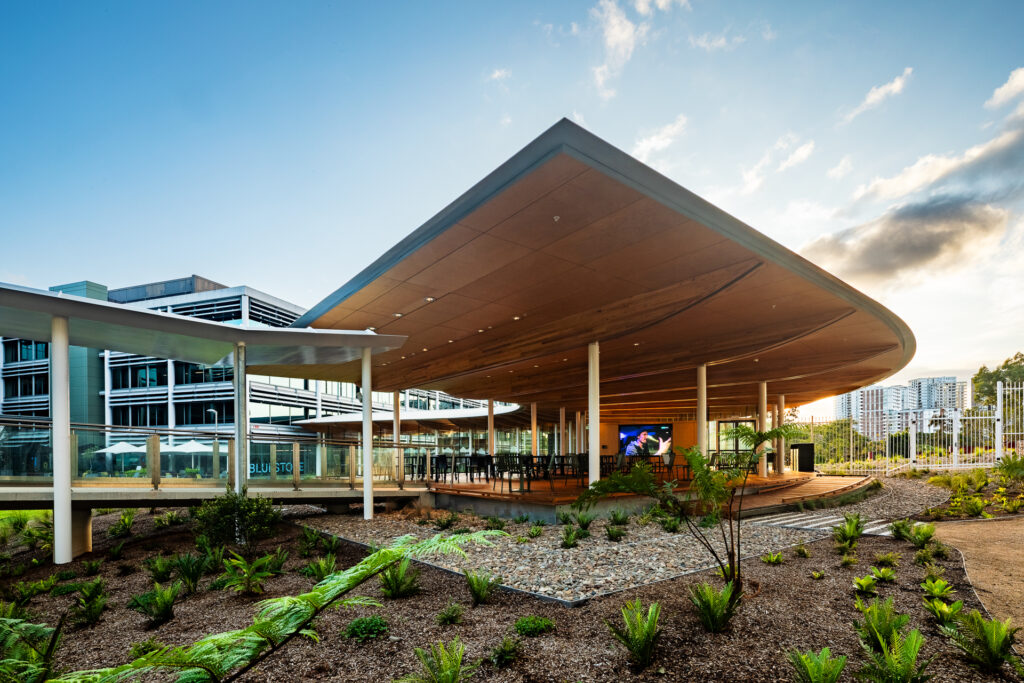
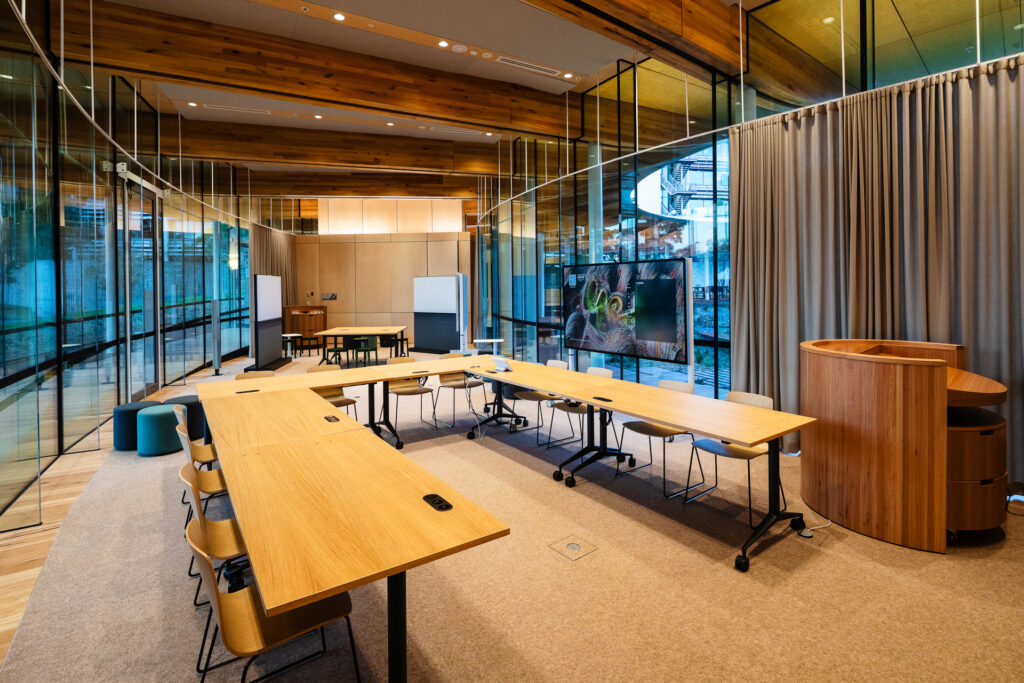
The O Pavilion was designed as Optus Campus’s new village square – an architectural landmark visible from surrounding office towers as a fifth façade. But the design’s seamless curved aesthetic created a structural challenge: the curved glass façade had to slot precisely between timber roof beams above and a concrete base below, with only 3mm tolerance for error.
Any discrepancy between the steel structure, timber roof, and concrete base would cause immediate clashes. The glass simply wouldn’t fit.
Adding complexity:
- All structural members were custom-made with no standard replacements
- Existing post-tensioned slabs hid tendons and reinforcement we couldn’t hit
- External awning connections had to penetrate the existing PT slab without hitting services
- The design required minimal columns and operable glass walls
The architects had designed something striking. Bringing it to life demanded absolute accuracy – one mistake would be catastrophic and expensive.
Our Approach
The team ran the project BIM-first, updating 3D models constantly throughout construction, catching clashes before they reached site. Weekly coordination meetings brought together concreters, steel fabricators, glaziers, and builders to resolve conflicts in real time.
Key coordination points:
- Custom connection details between steel columns and double timber roof beams are designed to prevent glass clashing
- External awning interface with existing PT slabs and service penetrations
- Workshop drawing reviews before steel fabrication began
When issues came up, we committed to a 24-hour turnaround. On this project, that commitment prevented disaster.
The Disaster We Averted
During the workshop drawing review, we identified a major constructability issue with the external awning as it connected to the existing structure. If structural steel had been fabricated and delivered to the site first, the cost and delay would have been substantial. Because we caught it during coordination, it was resolved within 24 hours.
Outcome
The final building matches the design intent exactly – because on this project, anything less would have caused structural clashes. Zero construction delays on the main build. The curved roof is seamless, the operable glass walls function perfectly, and the structure “touches the ground lightly” exactly as the architect envisioned.
Craig Earley, Associate Principal, Architectus:
“Problem solving ability and collaboration. Honestly it’s amazing how they made the structure design work in line with the architect’s vision for the building.”