Building Communities, Not Just Buildings: Vertical Aged Care in Sydney
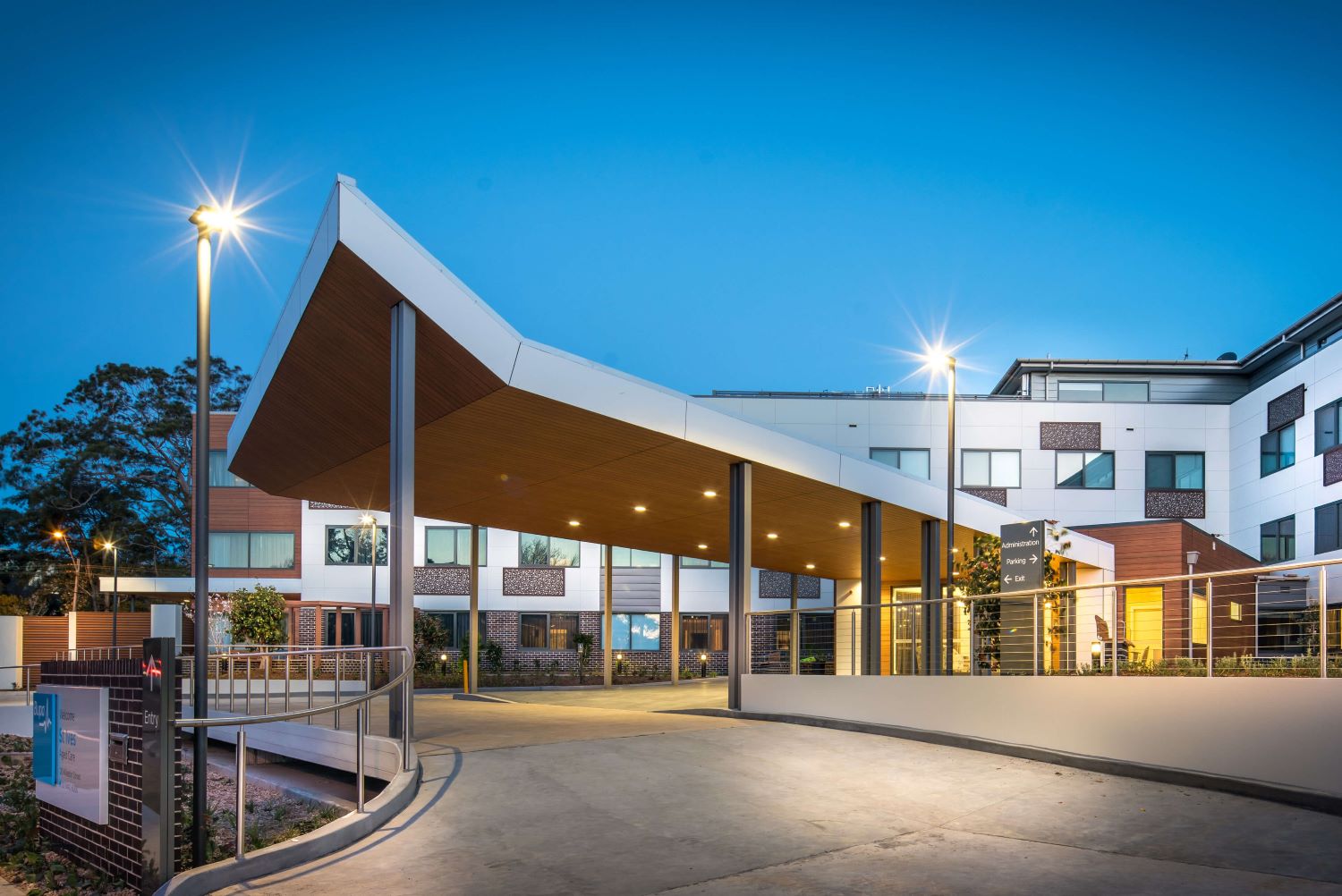
Sydney’s aged care operators face a problem with no easy answer: their residents want to stay near family, shops, and familiar streets, but urban sites that can fit traditional single-storey campuses don’t exist anymore.
That constraint is forcing a fundamental rethink. HammondCare’s $300 million Greenwich redevelopment and Pathways’ $87 million Cremorne precinct are proof that vertical villages are becoming the new standard. Multi-storey buildings integrating independent living, residential aged care, and dementia support under one roof.
With Australia’s aged care market projected to nearly double by 2033 and the New Aged Care Act (commenced November 2025) raising the bar on design and care standards, more projects like these are inevitable.
The land doesn’t lie
Urban Sydney doesn’t have space for sprawling campuses. Provider numbers dropped 3% in 2024 as smaller operators exited. The ones staying are consolidating and building vertically.
The numbers driving this:
- Demand will surge fourfold by 2047
- Home care use tripled from 2017 to 2024, but residential care remains essential for complex needs
Baby boomers want apartment living with urban amenity access, not isolation. Families want parents nearby. Urban land costs make traditional campus models unviable.
It’s not just a tall building
A vertical village done well integrates residential care with health hubs, therapy spaces, communal amenities, and walkable access to the neighbourhood. Think household models on each floor rather than institutional wards – neighbourhoods built vertically.
A sample scale would be 30 palliative care beds, 20 mental health beds, 45 dementia-specific aged care beds, plus 89+ seniors living apartments and full health hub facilities in one multi-storey campus.
Done poorly, it’s just an apartment tower with aged care branding.
What this means if you’re managing one of these projects
A few realities worth knowing:
- Healthcare loading requirements exceed residential standards. Medical equipment, emergency systems, and mobility aids demand different structural design from the ground up.
- Constrained urban sites create foundation complexity, especially when building on or around existing structures.
- Services coordination is genuinely different – medical gases, healthcare-spec lifts, fire safety designed around mobility-impaired evacuation, and acoustic separation between floors that apartments simply don’t require.
Margins are also tight. The sector has improved (65.9% of residential providers are now profitable, up from a majority at a loss in 2023), but over-engineering still wastes money and under-engineering creates variations you can’t afford.

The right team makes the difference
Vertical villages aren’t a trend that will pass. Demographics, land economics, and the New Aged Care Act make them inevitable in urban markets.
These changes are significant, but they’re manageable with the right team. At Birzulis, we’ve worked in aged care long enough to know what these projects need – practical, efficient structural solutions that meet new standards without inflating budgets. Talk to us and get it right from the start.